
Updated 2 July 2026
Voting on Trading 212 is the shareholder right most retail investors either don’t know they have or quietly ignore. When you buy shares, you’re buying a small piece of a company, and with that can come the right to vote on how it’s run.
Trading 212 does pass this right on to you, but with some conditions worth understanding.
Here is how voting works in practice on the platform, what you can vote on, how the rules differ for fractional and European shares, and whether it is worth your two minutes.

Key Takeaways
- If you hold the underlying shares with Trading 212, you may be eligible to vote at shareholder meetings.
- Trading 212 facilitates proxy voting on a best-effort basis: you get an email, click a link, and vote online in minutes.
- You must hold the shares on the record date to be eligible for a given meeting.
- US fractional shares carry proportional votes; European shares vote only on whole shares, and lent-out shares lose their vote.
The Short Answer
If you hold shares on Trading 212, in an Invest account or a Stocks and Shares ISA, you may be eligible to vote at shareholder meetings. Trading 212 facilitates proxy voting on a best-effort basis, meaning it tries to provide access to as many voting events as possible but does not guarantee it for every stock.
When a vote is available, you get an email, click a link, and cast your vote online in a couple of minutes.
The restrictions worth knowing concern fractional shares, share lending and European securities.
For the platform basics, see our guide on how to use Trading 212.
What Is Shareholder Voting?
Owning shares makes you a part-owner of the business, and part-owners get to vote on key decisions.
These votes usually happen at Annual General Meetings (AGMs), and sometimes at special meetings called for specific decisions. The agenda might cover electing or removing board members, approving executive pay, authorising share buybacks or new share issues, approving mergers, or changing the company’s constitution.
Each share normally carries one vote, so a hundred shares is a hundred votes.
The more you own, the more influence you have.

For a sense of scale, when Trading 212 offered proxy voting on Coca-Cola, the public collectively held around a quarter of the company, over a billion shares. Against a number like that, a single retail holding has very little sway over what a mega-cap decides.
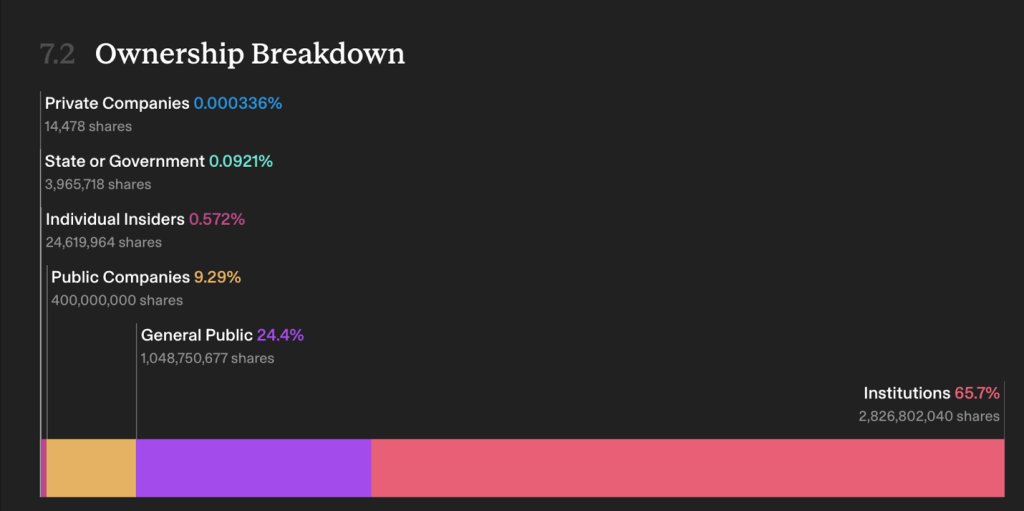
Collectively, though, retail shareholders can make a difference, particularly on controversial proposals.
How Voting Works on Trading 212
Trading 212 provides proxy voting, so you do not attend the meeting yourself. You vote remotely through a third-party platform.
To be eligible you must have held the shares on the record date, a cut-off set before the meeting; if you buy after that date you cannot vote at that particular meeting, even if you still hold the shares when it takes place.
When a company you hold announces a vote, Trading 212 emails you, typically two to six weeks before the meeting.
The email comes from [email protected], not the usual Trading 212 address, so it is worth checking your spam folder if you are expecting one.

Inside is a “Vote Now” button that takes you to a page listing every proposal. You vote for, against, or abstain on each one. Most ballots have only a handful of proposals, so it rarely takes more than a few minutes, though a packed AGM agenda can run a little longer.
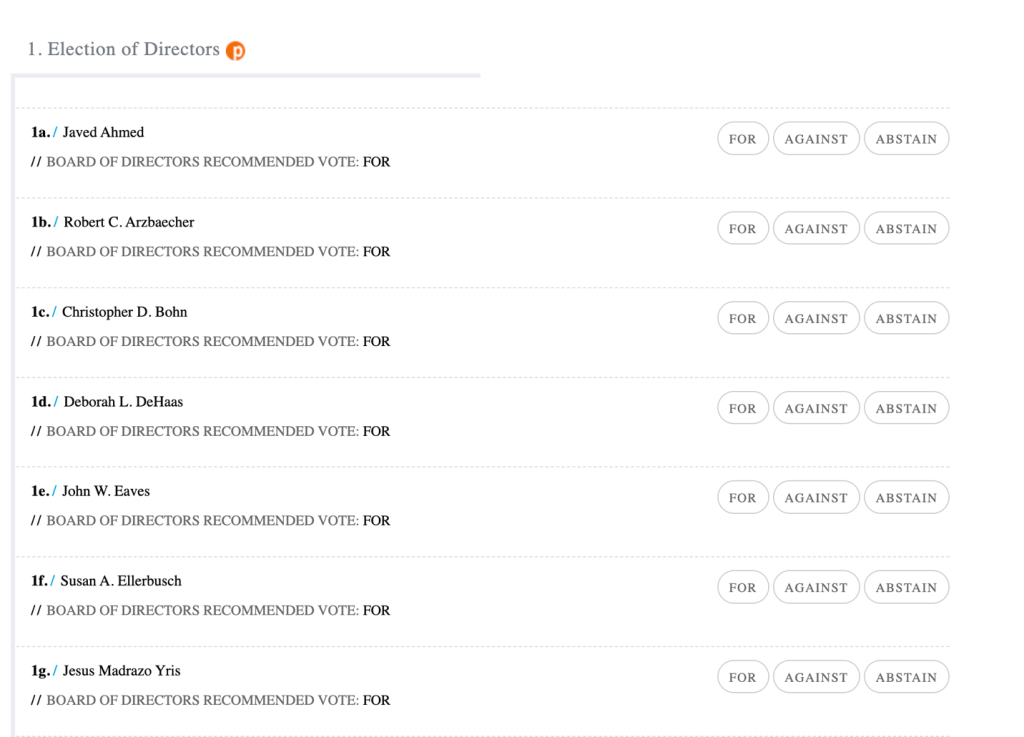
Because the service operates on a best-effort basis, Trading 212 may not support some securities or jurisdictions.
If Trading 212 offers a vote for one of your holdings, you will receive the email.
If you do not, Trading 212 either does not support that vote or you did not meet the eligibility requirements on the record date.
Fractional Shares and Voting
This is one of the most common questions. For US securities, the bulk of what most people on Trading 212 hold, you can vote even if you own less than one full share, so 0.5 of a share of Apple still casts a proportional vote, and this also applies to European listings of US securities.
| US Securities | European Securities (SRD II) | |
| Fractional share votes? | Yes — proportional | Whole shares only |
| Example | 0.5 shares → 0.5 votes | 1.75 shares → 1 vote |
| European listing of US shares | Proportional vote applies | — |
For European securities the rules differ: under the European Shareholder Rights Directive, known as SRD II, votes can only be cast on whole shares, so 1.75 shares of a European company gives you one vote, not 1.75. The fractional portion does not count.
The practical consequence is that a portfolio of small European positions may not carry votes until each reaches a whole share, whereas your US fractions vote regardless of size.
All voting rights at Trading 212’s custodian are forwarded to eligible shareholders on a pro-rata basis, so you get your fair share rather than it being first come, first served.
Our guide to fractional shares covers how the underlying ownership works.
Share Lending and Voting
There is an important connection with share lending. If you have share lending enabled and your shares are out on loan when a voting event happens, you temporarily lose the voting rights on those shares.
While they are lent, the borrower holds the vote, not you.
| Shares lent out? | Voting rights |
| No | You retain the vote |
| Yes | Borrower holds the vote and you cannot vote those shares |
For most people, this is not a major issue, since few retail investors actively vote. But if corporate governance matters to you and you want to be sure your votes are always available, disabling share lending keeps your shares and their votes with you at all times. It is one of the trade-offs of lending out stock to earn a little extra, and worth weighing if voting is something you intend to do.
Should You Bother Voting?
This comes down to personal preference. It takes two minutes, it costs nothing, and it is your right as a shareholder.
Even if your individual vote will not swing the outcome of a mega-cap’s meeting, taking part keeps you engaged with the companies you own.
Reading the proposals shows you who is on the board, how much the company pays its executives, and which strategic decisions management is putting to shareholders for approval.
It is one of the easiest ways to go from a passive holder to someone who genuinely understands what they own.
At the very least, it is worth reading the agenda when the email arrives, because occasionally there will be something that affects you directly, a decision on dividends, a proposed merger, or executive pay that looks excessive, and that is when your vote matters most.
Reviewing an agenda is also one of the simplest ways to learn how a company is actually run, beyond its share price.
And remember that if you do not vote, the big index funds that also hold the stock vote on their own priorities, which may not match yours.
Conclusion
Shareholder voting on Trading 212 is real, free and easier than most people expect: check your email, click the link, cast your vote.
Mind the record-date rule, the difference between proportional US fractional votes and whole-share-only European votes under SRD II, and the fact that lending your shares out hands the vote to the borrower.
Whether you vote on every meeting or only the ones you care about, at least now you know how it works.
FAQ
Can I vote on shares held with Trading 212?
Yes, on a best-effort basis. If a voting event is available for a holding, Trading 212 emails you a link to vote online, usually two to six weeks before the meeting.
Can I vote with fractional shares?
For US securities, yes, with a proportional vote even below one share. For European securities, SRD II allows votes only on whole shares.
Why have I not received a voting email?
Either the event is not supported, you were not holding the shares on the record date, or the email from [email protected] is in your spam folder.
Does share lending affect my voting rights?
Yes. If your shares are out on loan during a voting event, the borrower holds the vote. Disabling share lending keeps your voting rights with you.