
Updated 24 August 2026
An ISA transfer to Trading 212 is what you’re after when you’ve got an ISA sitting with an old bank or broker, maybe charging fees you’d rather not pay, maybe just not the platform you want to build on. The worry that stops most people is the £20,000 allowance: will moving the money use it up, or cost you the tax-free status you’ve built over years?
The short version is that a proper transfer protects both. What matters is doing it through the official process rather than withdrawing the money yourself and choosing the right method for what you hold.
Here is how it works, end to end.

Key Takeaways
- You can transfer an existing ISA to Trading 212 for free, keeping your tax-free status and without touching your annual allowance. (Tax treatment depends on your individual circumstances and regulations which may change.)
- There are two methods: a cash transfer (holdings sold and moved as cash) or an in-specie transfer (holdings moved as they are).
- You can transfer your whole account or only part of it by either method. Depending on what your current provider supports.
- You start it inside the app, and it usually completes in a couple of weeks. Though your old provider sets the pace.
The Short Answer
You can transfer an existing ISA into Trading 212 for free, without losing any of its tax-free status and without it touching your annual allowance.
There are two methods: a cash transfer, where your investments are sold, and the money moves across, or an in-specie transfer, where your actual holdings move over as they are.
You start it inside the Trading 212 app. Trading 212 does most of the legwork with your old provider, and it typically completes in a couple of weeks.
The detail below matters mainly because the method available depends on what your current provider supports, and what you hold. If you are new to the platform, our guide on how to use Trading 212 covers the account itself.
(Tax treatment depends on your individual circumstances and regulations which may change.)
Do Not Just Withdraw and Re-Pay
This is the single most important point. Because getting it wrong is expensive and cannot be undone for the tax year.
If you withdraw the money from your old ISA and pay it into your Trading 212 one yourself the moment it leaves the ISA wrapper, it loses its tax-free status. Paying it back in counts as a brand-new contribution against this year’s allowance.
Picture £40,000 built up over several years. Withdraw it, and you couldn’t redeposit it all, because you’d be capped at the £20,000 annual limit. The remaining £20,000 would lose its shelter for good. A proper ISA transfer sidesteps all of that, because the money never leaves the wrapper. It is the difference between keeping years of tax-free growth.
And giving up half of it to save a little time.
The £20,000 Allowance Question
So, the question everyone asks: does transferring eat into your £20,000 annual ISA allowance? No. Transfers of existing ISA money are entirely separate from your allowance.
It does not matter how much you transfer or how many times you do it. Your £20,000 for the current tax year is untouched. The allowance applies only to new money you pay in.
The practical consequence is freeing. You are never trapped with a poor provider out of fear of wasting your allowance.
Because moving existing ISA money carries no allowance cost at all.
That is exactly why the transfer route beats withdrawing and redepositing. It keeps the money inside the wrapper and off your allowance at the same time.
Cash vs In-Specie
A cash transfer is the simpler of the two. Your investments are sold; everything becomes cash, and that cash is sent to Trading 212, where you rebuild your portfolio.
The upside is a clean slate. The downside is that you have to rebuy everything, and while you are sitting in cash, you are out of the market. So a few days of price movement could go either way.
An in-specie transfer, which Trading 212 calls a stock or portfolio transfer, moves your investments across without selling them. So you stay invested the whole time, and your holdings stay intact.
There are real conditions, though. Both providers must support it, and you can only move whole shares and ETFs that are also available on Trading 212.
Any fractional shares cannot be moved in specie and are sold for cash, and anything not on the platform cannot move as stock either. One point worth clearing up, because it is widely misstated online.
When you transfer into Trading 212, you are not forced to use cash for a partial move. With an in-specie transfer, you choose which holdings to move, and with a cash transfer, you choose a full or partial amount.
The full-account-only rule that people often cite applies in the other direction. When moving a Trading 212 ISA out to another broker, not when moving in.
| Cash transfer | In-specie (stock/portfolio) transfer | |
| What happens to your holdings | Sold and moved as cash, then you rebuild your portfolio | Moved across as they are, without selling. You stay invested |
| Time out of the market | Out of the market while in cash, prices could move either way | None. You stay invested the whole time |
| Partial or full (transferring in) | Choose a full or partial amount | Choose which holdings to move, full or partial |
| Main conditions | Simpler, with fewer conditions | Both providers must support it. This means only whole shares/ETFs that are also on Trading 212 (fractional shares are sold to cash) |
The Step-by-Step Process
The process itself is straightforward. Open the app, and if you have not already, set up the relevant ISA first.
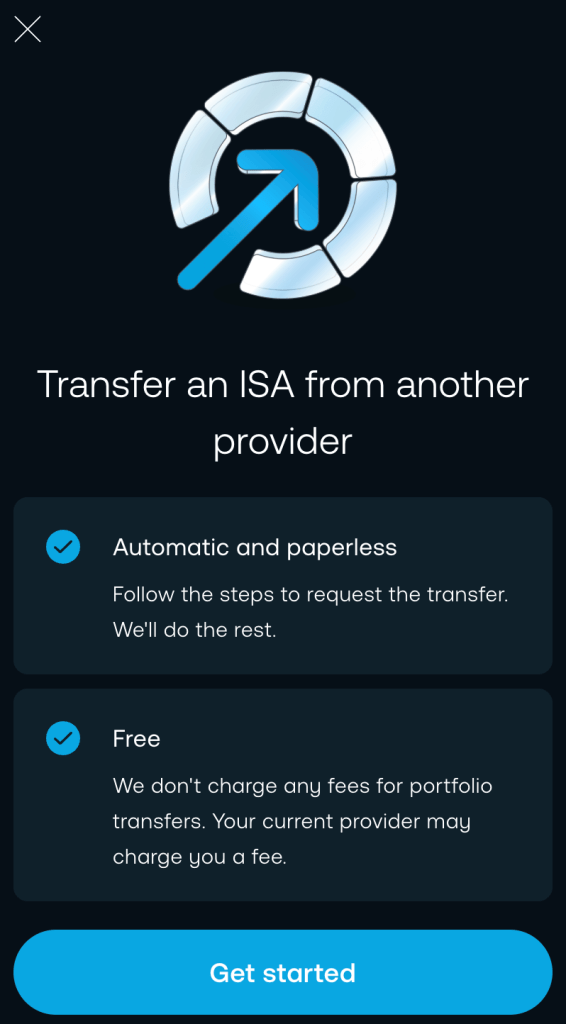
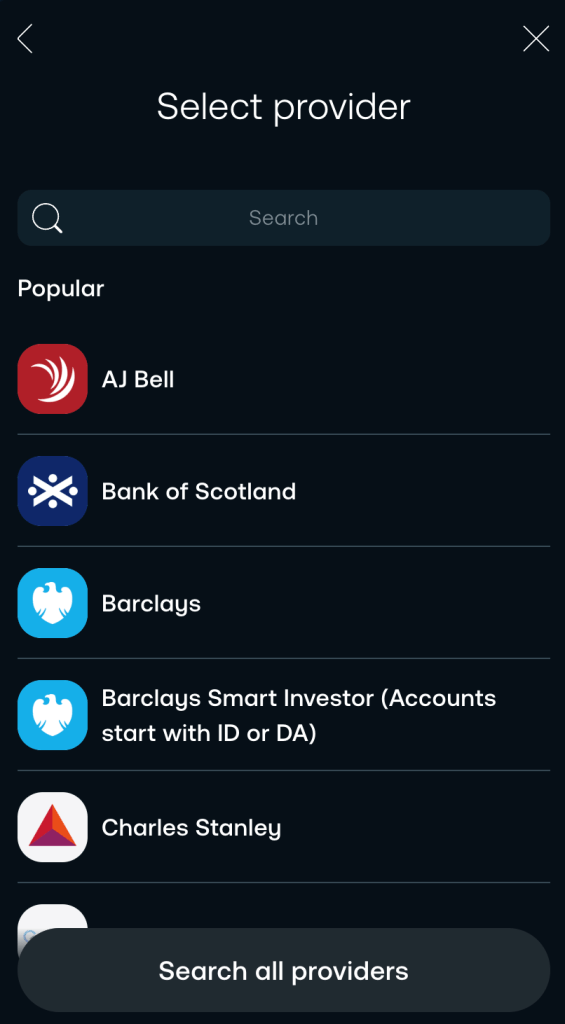
Choose your method. With an in-specie transfer, you pick the tax-year subscriptions to move, decide whether to include any uninvested cash, and select the specific assets you want to bring across. With a cash transfer, you pick the subscriptions and choose whether to move the full balance or a partial amount.
From there, Trading 212 sends the request to your old provider, who processes it on their end. You get status updates in the app, plus a notification when your stocks or cash arrive.
One useful detail: you can cancel an incoming transfer while it’s still in the early review stage, but not once it has progressed, so get your choices right before it’s underway.
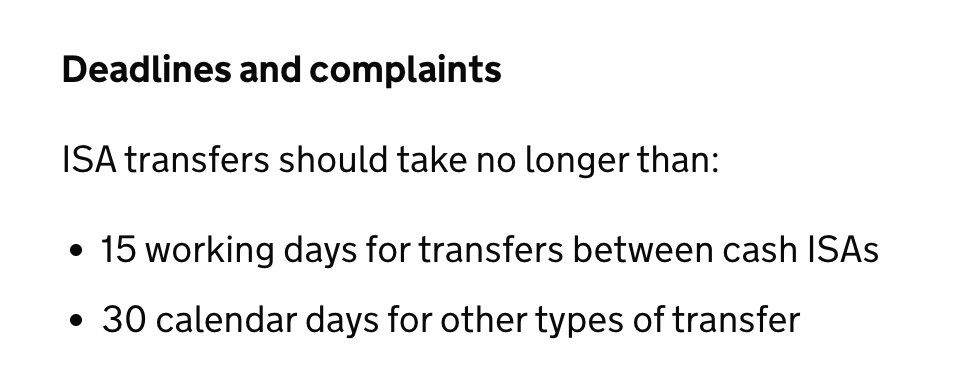
On timing, HMRC’s guideline is up to 30 calendar days for a Stocks and Shares ISA and around 15 working days for a Cash ISA. In practice it’s often quicker, but a big legacy bank can take close to the full window.
Fees and Common Concerns
Trading 212 does not charge anything to transfer in. The cost to watch for is at the other end. Your current provider may charge an exit or transfer-out fee, often a flat amount, so check before you start.
On a large pot, a small exit fee is easily worth paying to reach a lower-cost platform.
On a small balance, the same fee is a bigger percentage hit. So do the maths for your own situation, and compare it against our guide to Trading 212 fees to see what you would be moving to.
A few quick reassurances. Transferring between ISA providers is not a taxable event. So there is no capital gains tax whether you go cash or in-specie.
With an in-specie transfer, your dividends follow the holdings across.
With a cash transfer, you are out of the market while the money is in transit. Which is a point in favour of in-specie during dividend season.
Remember that fractional shares are the part that always has to be converted to cash, and if you ever want your money back out later, that is a separate process. Covered in our guide on how to withdraw from Trading 212.
Conclusion
To recap: transferring an ISA into Trading 212 is free, does not touch your annual allowance, and does not cost you your tax-free status.
As long as you use the official transfer process rather than withdrawing the money yourself.
Choose in-specie to keep your whole-share holdings invested throughout, selecting the holdings you want to move.
Or cash for a clean reset, or where your current provider only supports cash. Either way you can move all or part of the account, and fractional shares always convert to cash.
Request it in the app and let Trading 212 handle the legwork, and it usually lands within a couple of weeks.
(Tax treatment depends on your individual circumstances and regulations which may change)
FAQ
Does transferring an ISA use my annual allowance?
No. Transfers of existing ISA money are separate from your £20,000 allowance. No matter how much or how often you transfer.
How long does an ISA transfer to Trading 212 take?
HMRC’s guideline is up to 30 calendar days for a Stocks and Shares ISA, and around 15 working days for a Cash ISA, though it is often quicker.
Does Trading 212 charge to transfer an ISA in?
No. Trading 212 does not charge to transfer in. But your old provider may charge an exit or transfer-out fee, so check first.
Can I transfer only part of my ISA?
Yes. You can move part of your ISA into Trading 212. A cash transfer lets you choose a full or partial amount, and an in-specie transfer lets you select which holdings to move. The full-account-only restriction applies only when transferring a Trading 212 ISA out to another broker, not when transferring in.