
Updated 23 October 2026
Short answer: Waiting for a dip sounds like a strategy but usually isn’t one. There’s no agreed definition of a dip, no reliable way to know when one is coming, and no reliable way to know when it’s over.
With an income portfolio like the (Almost) Daily Dividends pie there’s an extra cost: every day on the sidelines is a day you aren’t earning dividends.
The better question isn’t “when should I invest?” but “is this pie the right fit for me?” If it is, the best time is when you’ve made that decision.
Is the (Almost) Daily Dividends Pie Right for You?
Before timing, a quick reality check, because the most important question isn’t when, it’s whether.
This is an income portfolio, designed for people who specifically want passive, regular dividend income from a diversified set of blue-chip stocks, held over the long term, most likely with consistent contributions. If that sounds like you, the rest of this page applies.
If you’re looking for aggressive growth, want to trade actively, or need this money back in the short term, this probably isn’t the right vehicle, and no amount of good timing changes that. The full design is on the (Almost) Daily Dividends Portfolio page, and whether it suits your goals is discussed in is the pie a trap?
If it does fit, then let’s talk timing.

What “Waiting for a Dip” Usually Means
“Wait for a dip” is a catch-all phrase, but underneath it there are usually two situations:
- A lump sum ready to deploy, held by someone who’s nervous about putting it all in at what feels like a high market.
- A regular monthly contribution that, instead of being invested on payday, is held back in the hope of a better entry point.
Both feel rational in the moment. Nobody wants to invest on a Friday and watch the market fall 5% on Monday. But once you look at dip-waiting as a strategy rather than a feeling, it falls apart quickly.
What Counts as a Market Dip?
If you’re going to wait for a dip, you need to know what you’re waiting for, and most people using the phrase have never defined it. Is it a 2% pullback? A 5% correction? 10%? A proper bear market down 20% or more?
These are wildly different events at different frequencies:
- Small pullbacks of a few percent happen constantly; there’s one going on most weeks if you look closely.
- Corrections of 10% or more happen roughly every 18 to 24 months on average.
- Proper bear markets come every five to ten years or so.
Without a defined threshold, one of two things happens: you get bored and invest at a random moment that wasn’t the dip you were after, or you wait indefinitely because the dip you imagined never quite materialises.
Undefined dip-waiting isn’t a strategy; it’s procrastination driven by emotion, either fear that the market will fall after you invest or the wish for a better price.
Why Buying the Bottom Is So Hard
Say you do define your threshold, “I’ll wait for a 10% drop from the recent high”, and the market obliges. You’ve still only solved half the problem, because at the bottom of a fall it won’t feel like the bottom.
It feels like things might keep falling, which is why most people who try to time dips either buy too early and watch prices keep dropping, or wait too long and miss the recovery.
Recoveries from market lows are usually fast and front-loaded; the biggest rebound days tend to come within weeks, sometimes days, of the bottom. By the time you’re confident the worst is over, you’ve missed a meaningful chunk of the bounce.
Even people who correctly call the dip often don’t profit from it, because the second decision, when to buy in, is as hard as the first. You only know it was the bottom with hindsight.
Can You Time the (Almost) Daily Dividends Pie?
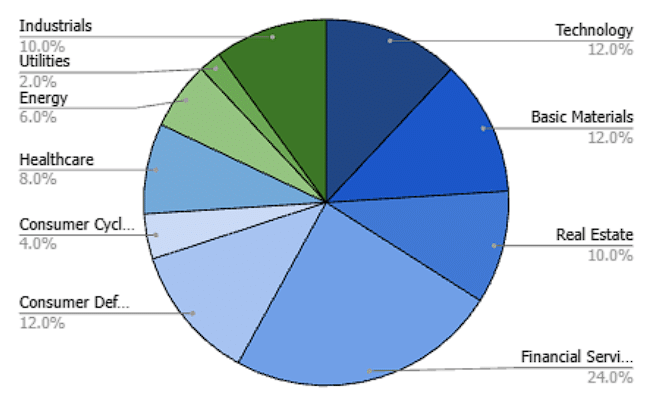
Trying to time the (Almost) Daily Dividends pie is essentially the same as trying to time the entire market. The pie spans technology, financial services, consumer defensives, real estate, healthcare, industrials, energy and more; no single sector dominates to the point where a crash there would derail the whole thing.
That diversification is deliberate, and it means you’d need everything to dip at once for timing to make a meaningful difference to your entry point. That kind of broad dip happens, but nobody reliably knows when, or when it recovers.
Time in the Market vs Timing the Market: What the Data Says
The classic finding, referenced in every honest investing book, is that time in the market beats timing the market.
Vanguard, JP Morgan and Fidelity have all run variations of the same study with the same conclusion: investors who try to time entries and exits underperform those who stay fully invested over the long run, even in scenarios designed to favour the timers.
One often-quoted stat: missing just the 10 best days in the market over a 20-year period can roughly halve your returns, and those best days tend to cluster around the worst ones. People who panic-sell during falls are very often the ones who miss the recovery, because they’re still in cash when the rebound happens.
That doesn’t mean profitable dips never come. They do. It means that positioning yourself for them, going into cash, holding off contributions, waiting for the perfect moment, tends to cost more than it earns over time.
The Cost of Waiting: Missed Dividend Income
With a growth portfolio, three months of waiting for the perfect entry means potentially missing some price appreciation, which you can argue you’ll catch later.
With this pie you’re also sacrificing dividend income. It pays out (almost) every day, so three months of waiting is three months of income you never get back, regardless of what prices do in the meantime.
That’s a tangible, daily cost, not a theoretical one. The dividend clock starts the moment you invest, not the moment the market finally does what you hoped.
What If the Market Crashes Right After I Invest?
This stops a lot of people from ever starting, and it’s understandable. But even during a downturn the companies in the pie are still paying dividends; the income doesn’t stop because the price has dipped. The value of your holdings may be down on paper while the pie is still doing its job.
If you’re contributing regularly, a crash can work in your favour: your contributions buy more shares at lower prices, meaning more dividend-paying assets for the same money.
The worst thing you can do is panic and pull out, turning paper losses into real ones. What matters far more than your entry point is having a plan and sticking to it when things get uncomfortable.
Using Trading 212 AutoInvest to Stop Waiting
One practical reason people get stuck in dip-waiting is that they leave the decision open every month. Sit down on payday, “hmm, market still looks high, maybe another week”, and twelve months later the cash pile has grown instead of the pie.
If you recognise that pattern, the simplest fix is to remove the decision from yourself entirely. Set up Trading 212’s AutoInvest: pick the amount, pick the frequency, and the deposits go in regardless of what the market is doing that day.
You’re not making a fresh decision every month; you’re executing one you already made. It sounds like a small piece of automation, but psychologically it does a lot of heavy lifting. The hardest part of investing isn’t the strategy, it’s the discipline, and AutoInvest takes that question off the table. How it works is in AutoInvest or manual investing.
Pies & AutoInvest is an execution-only service, following your own investment decisions. Not investment advice or portfolio management.
Does It Matter How Much I Contribute Each Month?
Not as much as you might think. What matters far more is contributing consistently.
A smaller amount every month serves you better than larger, irregular deposits, because it keeps self-balancing working, keeps the compounding ticking, and keeps you engaged with the strategy rather than dipping in and out.
More is more, obviously, but don’t let the size of what you can afford put you off. Decide what works, make it a habit, and stick to it.
Is the Market Too High to Invest Right Now?
“Sure, the data says don’t time the market, but the market’s really high right now, isn’t this an obvious time to wait?” I understand the instinct.
But the market has been described as “really high right now” for most of the last 15 years. Every year since the 2009 recovery there have been credible-sounding voices saying we’re at the top and the crash is imminent.
The people who listened and stayed in cash spent over a decade waiting for a crash that, when it did come in 2020, recovered within months. They missed enormous compounding waiting to be right about something they were never going to time.
That doesn’t mean a correction isn’t coming. It might be. Nobody knows. The question isn’t whether one is coming; it’s whether you can reliably know when, and when it’s over. The likely answer to both is no.
Good Reasons to Hold Off Investing
Yes, there are a couple, though none are about timing the market:
- You aren’t sure the pie fits your goals. If you want a couple of weeks to think it through, that isn’t dip-waiting, it’s due diligence; take the time.
- You have high-interest debt to clear or no emergency fund yet. Holding off until those are sorted is also sensible; the opportunity cost of investing isn’t just lost dividends, it’s whatever else that money could be doing. Where cash belongs in the picture is covered in cash interest vs the pie’s dividend yield.
But “the market looks expensive right now” isn’t a good reason. That’s a feeling, not a strategy, and acting on feelings is often how people lose money.
Should You Wait for a Dip? The Verdict
Waiting for a dip sounds smart but in practice usually isn’t a strategy at all. No agreed definition of a dip, no reliable way to know when one’s coming, no reliable way to know when it’s over, and with this pie every day on the sidelines is a day you’re not earning income.
If the size of going all-in at once is what’s making you uncomfortable, split the deposit across a few weeks and move on; that trade-off is worked through in lump sum or DCA? If you have a steady income, set up AutoInvest and let it run.
But don’t sit on cash indefinitely waiting for a magic moment that may never come, and that you almost certainly won’t recognise if it does. Time in the market, every time.