
Updated 23 October 2026
Short answer: Open the pie, tap Withdraw, enter the amount and confirm. Trading 212 sells a proportional slice of every holding to raise that cash, so the pie stays balanced whether you’re selling all of it or part of it.
The mechanics are the same in an ISA or a general Invest account; the one thing to think through before a large sale is tax if you’re not inside an ISA.
This doesn’t come up as often as other questions, but when it does it’s usually a real practical need: someone wants to close out their position in the (Almost) Daily Dividends pie, fully or partially, and isn’t sure how to do it cleanly.
Reasons vary: a financial goal reached, money needed for a big purchase, a change of strategy, or simply wanting to try a different approach. Whatever the reason, exiting a pie is straightforward on Trading 212.
Full vs Partial Withdrawal From a Trading 212 Pie
The first decision is whether you’re selling everything or just some of it.
- A full sale liquidates every holding in the pie. All 50 stocks are sold, the pie collapses to cash, and the proceeds land in your account to withdraw or redeploy.
- A partial sale takes out a specific amount without closing the whole thing. The pie keeps running and you withdraw a portion of the value, which is useful if you need some cash but want the rest to stay invested for the long term.
Both use the same interface. The only difference is whether you enter the full pie value or a specific amount.

How to Sell a Trading 212 Pie, Step by Step
- Go into the pie.
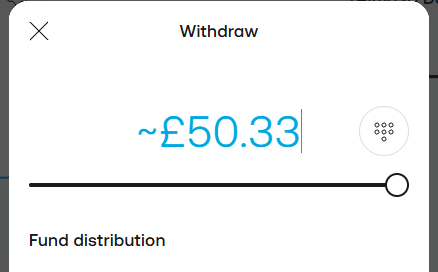
- Tap Withdraw.
- Enter the amount you want to take out and confirm.
Trading 212 then sells the appropriate proportion of every holding to raise that cash.
It doesn’t sell one or two stocks to hit your target; it sells a proportional slice of every holding, which keeps the pie’s allocation intact after the withdrawal. If the pie was balanced before, it’s still balanced after, just at a smaller total value.
The sales execute as market orders during trading hours. If you place the withdrawal outside market hours the trades queue up and execute when the relevant markets open. Since this pie holds US-listed stocks, that means US market hours, not UK ones.
Once the trades settle, the cash lands in Pie Cash first, then moves to your account cash balance. From there you can withdraw it to your bank or leave it in the account earning interest until you need it.
When to Sell: Market Hours and Timing
Market hours matter. The pie is US-listed, so trades execute during US hours, roughly 2:30pm to 9pm UK time. Start a withdrawal on Saturday morning and nothing happens until Monday afternoon. Not a problem, but something to plan around if you need the money quickly.
If a stock is having a bad day, waiting probably isn’t worth it. Some people delay because one holding dropped 5% that morning. Across a portfolio of 50 stocks, any single day’s movement in any single holding is small; the other 49 wash it out.
Trying to time a full-pie sale for a “good day” across all 50 holdings is essentially impossible, and the mental overhead isn’t worth the marginal difference. If you need the money, withdraw rather than overthinking the optimisation.
Selling a Pie: ISA vs General Investment Account Tax
This is the most important thing to check before you sell, particularly for a large withdrawal.
- Inside a Stocks & Shares ISA, selling is tax-free. No capital gains, no dividend tax, and nothing to report on a tax return; the wrapper handles it. You sell, withdraw, and there’s nothing further to think about.
- Inside a standard Trading 212 Invest account, the sales are potentially taxable events. Any capital gain, the difference between what you paid and what you sold for, could be liable for capital gains tax above your annual allowance. Dividends received along the way may also be liable for dividend tax depending on your total dividend income for the year.
The exact numbers depend on your personal tax situation, your other income and the size of the gain. For anything substantial, speak to an accountant or check HMRC’s guidance before pulling the trigger.
Selling a large gain all at once outside an ISA without factoring in the tax bill can be an expensive mistake.
What to Do With the Cash After Selling
Once the cash is in your account balance you have a few options:
- Withdraw it to your bank if you need the money for something in the real world; Trading 212 withdrawals are typically free and land within a day or two.
- Leave it in your Trading 212 cash balance earning interest if you don’t need it immediately; interest on uninvested cash keeps it working while you decide.
- Move it into a different investment. If you’re switching to something else entirely, the cash is already on the platform, ready to go.
Using Partial Withdrawals as Income
Some people use partial withdrawals to draw income from the pie rather than reinvesting dividends: instead of letting dividends compound, they withdraw a small percentage of the pie each month or quarter to fund their lifestyle.
That’s a valid approach in the decumulation phase, particularly if the dividend income alone isn’t enough. You’re selling shares to top up your income, using the pie as both an income generator and a capital source.
The thing to be aware of is that if you withdraw more than the pie earns in total return, you’re depleting the underlying capital over time.
That may be fine if it’s the plan, the pie doesn’t need to last forever, but know the maths so you aren’t surprised in 20 years. The alternative, taking the dividends as income without selling, is covered in how dividend reinvestment works.
Checklist Before Selling Your Pie
- Are you inside an ISA? If not, understand the tax implications first.
- Full exit or partial withdrawal? Different mental frame, different amount to enter.
- Do you have a plan for the cash? Selling without knowing why can leave money in cash indefinitely, which is often not what you actually wanted.
- Is the reason a good one, or an emotional response to short-term market movement? The pie is designed for long-term holding. Selling during a downturn because you’re nervous tends to lock in losses that would have recovered on their own.
Selling a Trading 212 Pie: Recap
Selling the (Almost) Daily Dividends pie is straightforward: go to the pie, tap Withdraw, enter the amount, confirm, and the platform sells a proportional slice of every holding. Full or partial, ISA or Invest account, the mechanics are the same.
The one thing to have thought through before selling is the tax side if you’re not in an ISA; get that wrong on a big withdrawal and it can cost more than the pie made you. Beyond that, the exit is clean and the platform handles it.
The pie itself is covered on the (Almost) Daily Dividends Portfolio page.