
Updated 23 October 2026
Short answer: Early on, probably not. While your deposits are large relative to the pie, self-balancing does the rebalancing for you.
Once the pie is big enough that deposits no longer move the needle, watch the Trading 212 pie score: around 6.5 or below is my signal to rebalance manually, which for most people works out to roughly once a year. Be aware of the tax angle if you hold the pie outside an ISA.
What Is Rebalancing a Trading 212 Pie?
Each slice of the pie is meant to represent a certain percentage of your portfolio. Over time some stocks grow faster than others, some dip, and those percentages drift away from the original targets. Rebalancing is just the act of bringing everything back in line.
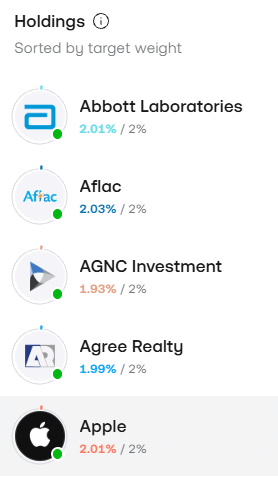
Drift happens because of price movement. Every stock in the pie moves at its own pace, and the longer you hold without intervening the more pronounced the drift becomes. A sharp rally in one sector or a dip in another can accelerate it quickly.
Drift is completely normal; it’s not a sign anything is wrong, just the nature of holding a diverse set of companies. The only question is how much drift you’re comfortable with before doing something about it.

Why You Probably Don’t Need to Rebalance a New Pie
For most people, especially in the earlier stages of holding this pie, manual rebalancing isn’t necessary at all, because of self-balancing through deposits.
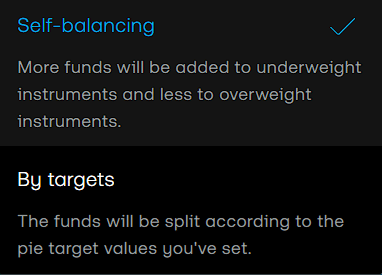
Every time you top up the pie with the self-balancing option, Trading 212 directs the new money towards the slices that are currently underweight. Your deposits do the rebalancing work automatically, without selling anything. It keeps the pie tidy without you lifting a finger.
The three deposit options are explained in self-balancing vs by targets on Trading 212.
That assumes you’re depositing regularly, though. If you’re more of a lump-sum investor, putting in larger amounts less often, self-balancing through deposits is less effective simply because there are fewer opportunities for it to work.
In that case keeping a closer eye on the pie score makes sense, and you may find yourself rebalancing manually a little more often than someone dripping money in every month.
When to Rebalance: The 6.5 Pie Score Signal
As the portfolio grows, your regular deposits become smaller relative to the whole. If you’re putting in £100 a month and the pie is worth £50,000, that deposit isn’t moving the needle enough to correct any drift. That’s the point where you might step in and rebalance manually.
The signal I use is the Trading 212 pie score. If it drops to around 6.5 or below, that’s generally my cue that the drift has become significant enough to address. It isn’t a hard rule, but it’s a practical benchmark, and it means you’re not obsessing over the pie every week.
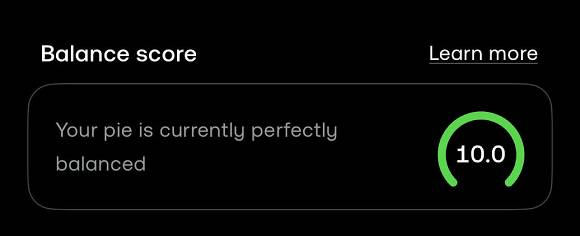
On frequency, roughly once a year is a reasonable target for most people. Some years you won’t need to do it at all if deposits have kept things balanced. Other years the market has done something dramatic and you’ll want to tidy up.
There’s no need to rebalance quarterly or monthly, which some new investors are tempted to do; that adds complexity and stress for no real benefit. Every rebalance involves trades, and those small costs chip away at returns over time.
Two Ways to Rebalance on Trading 212
When you use the Rebalance option in the pie, Trading 212 gives you a choice:
- Top up. Add cash to buy the underweight slices and bring them closer to target. Nothing is sold. This is effectively a self-balancing deposit, and it’s the option to choose if you want to rebalance without triggering any sales.
- Buy and sell positions. Sell the overweight holdings and use the proceeds, together with any Pie Cash, to buy the underweight ones. You see a preview before it executes, and you can untick any overweight holding you’d rather not sell.
That distinction matters for the next point.
Rebalancing Outside an ISA: The Tax Angle
A lot of people don’t realise that the buy-and-sell rebalance involves selling. Trading 212 sells the slices that have grown overweight and uses that money to buy the underweight ones.
That’s fine, but if you hold the pie outside an ISA those sales could be taxable events: if the positions have gone up in value, you may be crystallising a capital gain.
- Inside a Stocks & Shares ISA: there’s nothing to worry about.
- Outside one: factor it in before you press the button, especially as the portfolio gets larger, and consider using the top-up option, which doesn’t sell anything.
Will Rebalancing Affect My Dividends?
Not in any meaningful long-term way. You might shift a little weight away from a higher-yielding stock temporarily, but the pie is designed so that income is spread across a broad range of holdings.
Trimming one slightly to bring another back to weight won’t noticeably dent your monthly income. The dividend flow stays consistent through a rebalance.
Is There a Good Time to Rebalance?
Trying to time a rebalance is a rabbit hole and probably not worth the mental energy.
Rebalancing during a broader market dip can work in your favour, since you’re buying more of the slices that have fallen in price, which fits the long-term mindset of holding this pie. But if the pie score is telling you it’s time, don’t overthink it. The whole point of the benchmark is to avoid emotional decisions about when to act.
Why Is There Pie Cash After a Rebalance?
You may notice a small amount of Pie Cash sitting there afterwards. That’s normal. With 50 holdings, dividing money into fractional shares across all of them sometimes leaves a tiny remainder that can’t be deployed anywhere. It’s a rounding artefact, and Trading 212 has acknowledged it.
It isn’t wasted. Your next deposit combines with that Pie Cash and invests the full amount, so it gets swept up naturally.
In the meantime it earns interest if you have interest on uninvested cash enabled, which doesn’t turn itself on automatically. If it bothers you, you can invest it manually from the Holdings tab, but for most people it’s a tiny amount that sorts itself out.
Do You Need to Rebalance the Pie? Quick Recap
Rebalancing is something to be aware of, not something to stress about.
- Let deposits do the heavy lifting early on.
- If you’re a lump-sum investor, check in a little more regularly.
- Watch the Trading 212 score, and when it drops to around 6.5 that’s your signal.
- Aim for roughly once a year if you need to do it manually.
- Use the top-up option if you want to avoid selling, and be conscious of the tax side if you’re not in an ISA.
The pie’s overall design and maintenance is covered on the (Almost) Daily Dividends Portfolio page.
Pies & AutoInvest is an execution-only service, following your own investment decisions. Not investment advice or portfolio management. You are responsible for all investment and rebalancing decisions.